



Christopher Purdy
President, DKT International
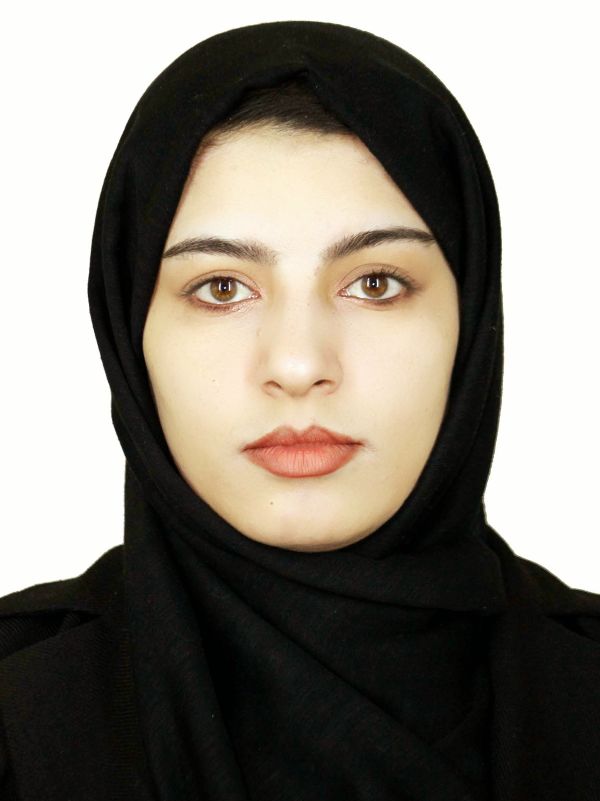
Narwan Alawi
Program Manager, DKT Afghanistan
Expanding access to reproductive healthcare in challenging environments isn’t easy. But with bravery, creativity and resilience, it’s possible.
Access to safe, high-quality sexual and reproductive healthcare should be everyone’s right. Yet for millions of women worldwide, that’s still not the case.
Thankfully, there are organisations dedicated to providing family planning products and services, even in challenging environments. In 2018, DKT International — which operates in more than 100 countries — began working in Afghanistan to help women make informed decisions about sexual and reproductive health, even under Taliban rule.1-2
On-the-ground support providing contraceptive access
For Afghan women, a knock on the door could mean access to contraception.
DKT has trained 250 community midwives who go door-to-door in Kabul, selling contraceptives, administering contraceptive injections or directing women to family planning services at their nearest pharmacy or clinic. It also makes contraceptives available across 15 of the country’s 34 provinces through a network of 2,244 outlets, including pharmacies, hospitals and private providers.
Pregnancy should never feel like a dangerous condition, but without proper care, it could. “For some people, it’s hard to get to health facilities,” says Gigih Yudhistira, Country Manager, DKT Afghanistan. “Especially if they live in rural areas. As a result, mortality is high, especially for pregnant women and children under five.”
The organisation is expanding its coverage, and its work is in demand. “Last year, we sold approximately 100,000 oral contraceptive pills and one million condoms over the counter in Afghan pharmacies and shops,” reveals Christopher Purdy, President, DKT International. “We also sold 67,000 IUDs (intrauterine devices) through hospitals and midwife clinics.”
Last year, we sold approximately 100,000 oral contraceptive pills and one million
condoms over the counter in Afghan pharmacies and shops,
Providing a ray of hope for reproductive health
While it’s difficult to deliver healthcare in this environment, it’s not impossible because family planning is often framed as ‘birth-spacing’, which aligns with Islamic principles. “The Ministry of Public Health has approved family planning as an essential component of maternal and child health,” explains Narwan Alawi, who manages the midwife training programme. “The Taliban allows women to work in the health sector and for contraceptives to be imported.”
However, women cannot go out alone, including to clinics or hospitals, and must be accompanied by their husband or male relative. “Also, in far-flung areas, some people believe that family planning is against the law,” says Ayesha Ahmed Khan, Head of Programmes at DKT Pakistan. “So, there are great challenges to overcome.”
Philanthropic support is vital to expand this work. “We need funding to train more midwives and to establish more clinics,” notes George Papachristou, DKT International Regional Director – Pakistan/Afghanistan. “We also need brave people on the ground like Narwan and Gigih, and I’m so proud of the work they do in Afghanistan. Our vision to help people will never stop.”
[1] Atef, S. & Elham, M. (2026). Taliban birth control ban: women ‘broken’ by lethal pregnancies and untreated miscarriages. The Guardian.
[2] Papachristou, G. & Yudhistira, G. (2026). Progress on family planning in Afghanistan is still possible. The Guardian.
