 Global Cause
In this issue
-

We must do more to protect mothers and babies from malaria
For any new mother, the months before delivery can be an exciting, albeit stressful time. But imagine being pregnant in a place where a deadly disease claims the lives of 10,000 mothers and 200,000 infants every year. For the 125 million pregnant women at risk of malaria every year, there’s no need to imagine –...
-

s Sponsored
Products and partnerships to fight malaria
An innovative partnership model is helping develop new products in the effort to fight malaria. Creating new diagnostics for malaria requires more than just new technologies. Market forces can drive innovation—or stifle it. When prices must be low and volume is limited, companies and other commercial entities might opt out of diagnostic development and their supply. Using an approach called a product...
-

s Sponsored
Empower local communities, avert future disease outbreaks
The COVID-19 pandemic has starkly revealed the interconnected nature of global health security. The effects of a faltering health system can be felt well beyond sovereign borders. This means that preventing the spread of a future pandemic rests on the strengthening of the systems which deliver healthcare in geographies where patients are most vulnerable. According...
-

How a new film shows what a world without malaria could look like
Malaria has plagued humanity throughout history and ending it has, at times, felt like a distant dream. Global investment and action has saved 7.6 million lives from malaria and prevented over 1.5 billion cases since 2000, but progress and funding to end the disease have stalled over recent years. The parasite is fighting back and...
-

El Salvador’s journey to zero malaria proves elimination is possible
On February 25, 2021, El Salvador marked a major milestone in its decades-long fight against malaria, becoming the first Central American country to be certified malaria-free. El Salvador is the third country in the Americas to be certified malaria-free in the past four years, following Paraguay in June 2018 and Argentina in May 2019. Certification of elimination is granted by the World...
-

Data is revolutionising how we track, prevent and treat disease
Since the discovery of the first vaccine in the 18th century, every hundred years has been marked by a transformational public health innovation. In the 19th century it was improved sanitation, followed by the discovery of antibiotics in the 20th century. This century, data is revolutionising how we track, prevent and treat disease, enabling public health authorities to make precise, real-time decisions that save lives. The response to the COVID-19...
-
How we’re getting closer to a malaria free world
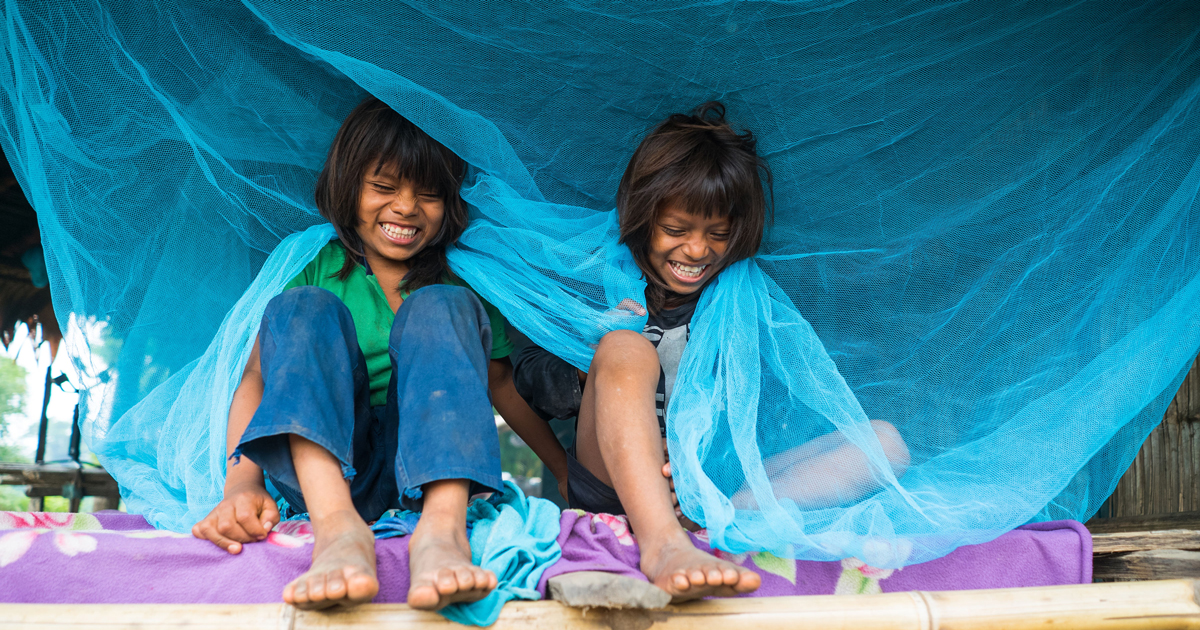
Ending malaria is the pathway to strengthening health systems, supercharging economies and beating pandemics like COVID-19. Since the turn of the century, the global malaria community has made incredible strides in the fight against malaria. Two decades of investment have saved 7.6 million lives and prevented 1.5 billion malaria cases, significantly reducing burdens on health systems worldwide. We’ve also...
-

s Sponsored
Ugandan progress offers hope in malaria fight
Uganda has achieved a remarkable reduction in malaria transmission by focussing on high burden areas. The challenge now is to maintain momentum amid the COVID-19 crisis. Between 2017 and 2018, the number of malaria cases in Uganda fell by 1.5 million due, in part, to a renewed focus on tackling the disease in high burden...
-

s Sponsored
Advancing promising science to fight the scourge of malaria
Developing effective antimalarial medical interventions can be a lengthy, high-cost, high-risk process. A financing instrument is available to support SMEs and potentially speed up the development of vaccines, diagnostics and therapeutics. Malaria continues to kill around 750 children under the age of five every single day. These young children are indeed the most vulnerable group...
-

Q&A with Anyika Onuora, Olympic Medalist and British sprint, track and field athlete
Anyika Onuora contracted malaria while visiting family in Lagos, Nigeria. On her return, with no symptoms, she set off on holiday to the Dominican Republic. Partway through her holiday, she begun to feel unwell and ended the trip early, heading back to her training camp in Loughborough. Two days later she was admitted to hospital,...