Global Cause


Nicole Lurie
Executive Director of Preparedness and Response, CEPI

Kate Kelland
Chief Scientific Writer, CEPI
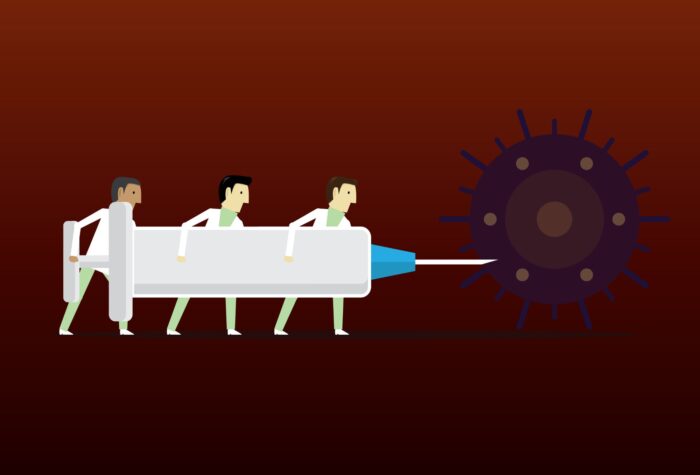
The world needs to develop vaccines and tools in advance of an outbreak so that we are not scrambling in an emergency.
More than 11,300 Bundibugyo ebolavirus cases have been reported in the Democratic Republic of the Congo (DRC) since May, making this the fastest-growing and second-largest Ebola outbreak on record. Nearly half of those infected have died.1 The devastating outbreak is sadly far from being contained. The global response is making significant progress, and its pace is markedly faster than during the 2014–16 West African Ebola epidemic.
Accelerated response
Five months ago, there were no licensed vaccines against Bundibugyo, and none in clinical development. Today, two candidates are in human trials,2 and a large-scale study to assess multiple experimental vaccines has started right at the heart of the outbreak3.
We’ve relatively swiftly reached this stage relatively swiftly because of a few critical factors. First, scientists, health agencies, regulators, manufacturers and funders came together within days to plan a coordinated response. Then, thanks to pre-established partnerships, knowledge on related Ebolaviruses and tried-and-tested technologies at the ready, vaccine developers such as the University of Oxford and Moderna created Bundibugyo-specific vaccine designs in days.2 Supported by rapid manufacturing of thousands of investigational doses, the first-in-human trial of a potential vaccine launched just eight weeks after the emergency was declared.
Planning ahead
Sadly, this has not been enough to change the epidemic’s course. But it shows that vaccines can move from design to human trials within weeks. In an outbreak when every day counts, that speed could save lives. Yet, the response also highlights how difficult it is to speed things up. Effective rapid action depends on the whole chain, from detecting a disease to developing, testing, licensing and delivering countermeasures.
What’s clear is that the global health system needs to build better preparedness before day one so that it can get ahead and not be scrambling to contain deadly outbreaks. The world must invest in research on the most threatening viral families, building knowledge on rapid, adaptable vaccine technologies and expanding networks of laboratories and manufacturers that can be activated in a crisis. With future pandemics estimated at $700 billion a year3 preparedness has never been more important.
[1] World Health Organization, 2026. Ebola disease caused by Bundibugyo virus – Democratic Republic of the Congo, Kenya and Nigeria. tinyurl.com/6utztkhz.
[2] CEPI, 2026. Three vaccine designs in the race to contain Bundibugyo Ebola. tinyurl.com/mrxnyuf8.
[3] Glennerster, R., et al. Calculating the Costs and Benefits of Advance Preparations for Future Pandemics. IMF Econ Rev 71, 611–648 (2023). https://doi.org/10.1057/s41308-023-00212-z